
Chiropractic Adjustment in Bradley | Serenity Health
Targeted spinal care for back pain, neck stiffness, headaches, and more. Real relief from a team that listens first.
What Chiropractic Adjustment Treats and How It Works
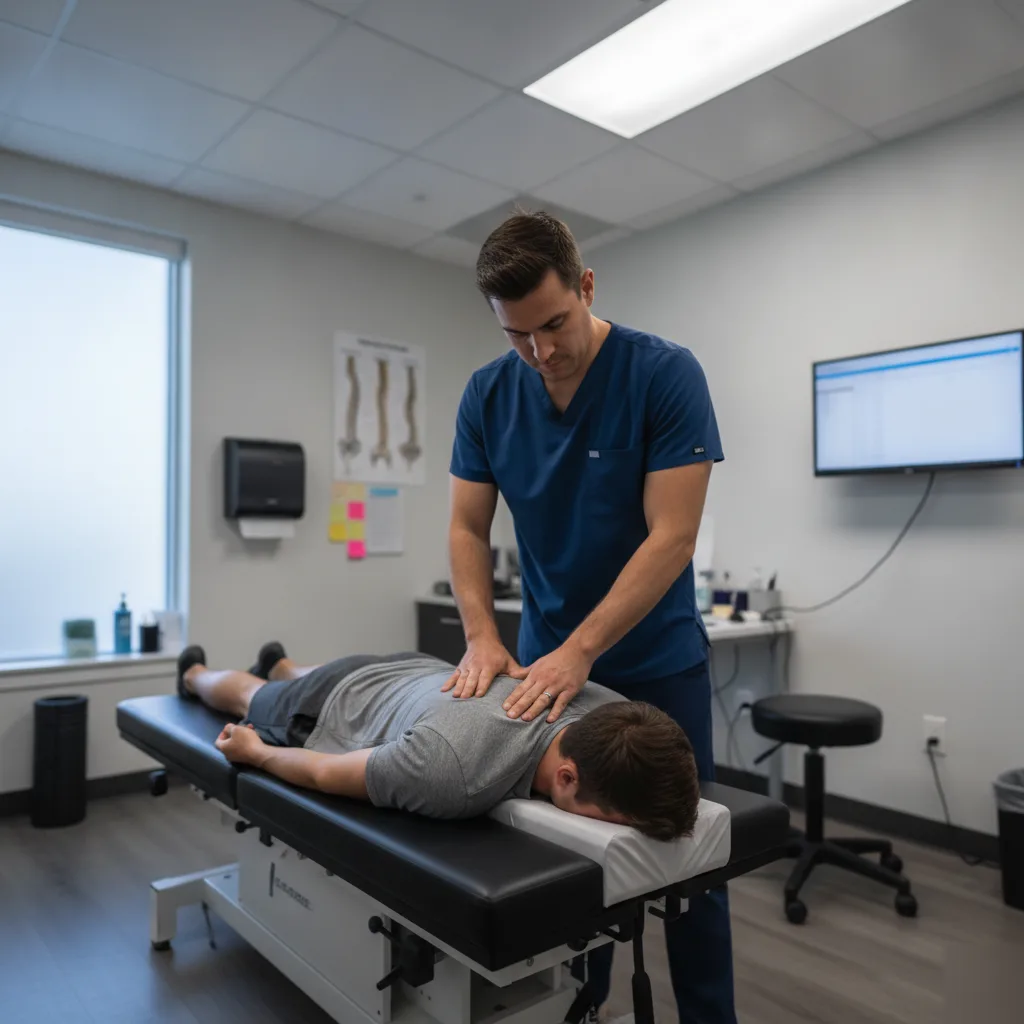
Most people walk into our office because something hurts. Back pain, neck stiffness, headaches that won't quit. And there's a spinal joint that isn't moving the way it should.
A chiropractic adjustment is a precise, controlled force applied to a specific joint. We use our hands, or sometimes a small instrument, to restore normal motion to a joint that's stuck or misaligned. When that joint moves freely again, pressure comes off the surrounding nerves and muscles. The body can start doing what it's designed to do.
Here in Bradley, we see a wide range of people. Construction workers from the industrial corridors off Route 50. Desk workers whose necks are locked up from staring at screens. Parents carrying toddlers on one hip for years. The conditions are different, but the underlying issue is often the same: a joint out of position, irritating a nerve, creating pain that spreads.
So what does chiropractic adjustment actually help with? Quite a bit:
- Low back pain and sciatica that shoots down the leg
- Neck pain and upper back tightness
- Headaches and migraines tied to cervical tension
- Sports injuries and repetitive strain
- Herniated disc symptoms causing numbness or weakness
According to the American Chiropractic Association, low back pain is the single leading cause of disability worldwide [1]. That's not a small problem. And a lot of those people haven't tried chiropractic care yet.
Here's what surprises most first-timers. The adjustment itself takes seconds. What we do before it — the assessment, the palpation, understanding exactly where your spine is restricted — that's where the real work happens. We're not just cracking backs. We're reading what your body is telling us and responding to it.
The pop or cracking sound people worry about is just gas releasing from the joint capsule. It's harmless. Most patients feel immediate relief, or at least a noticeable reduction in tension, right on the table.
Bradley residents don't have to keep managing pain with just rest and over-the-counter medication. There's a better path, and it starts with understanding what's actually going on in your spine.
What to Expect at Your First Adjustment Appointment
A lot of people walk through our door not knowing what's about to happen. That's completely fine. Most folks in Bradley have never had a chiropractic adjustment before, and the unknown part is what makes them nervous, not the actual treatment. So let's walk through it.
We start by talking. Before anything else, we want to know what's going on with you. Where does it hurt? How long has it been happening? Did something specific cause it, or did it just sort of creep up? We listen more than we talk in that first conversation, because the details you share tell us a lot about what your spine actually needs.
Then comes the physical assessment. We'll check your posture, your range of motion, and how your spine is moving. We press along specific areas to find where things feel restricted or tender. It happens constantly: someone comes in thinking their problem is in one spot, and the real restriction is two segments away. That's why we don't skip this step.
The adjustment itself usually surprises people. It's faster than they expected. We position you on the table, apply a controlled, quick movement to a specific joint, and that's often where you hear the pop. That sound is just gas releasing from the joint space. Nothing's cracking. Nothing's breaking. It's a normal part of how joints move when pressure is released.
Here's what most first-timers don't anticipate: some mild soreness the next day, similar to how your muscles feel after a good workout. That soreness usually fades within 24 to 48 hours, and most patients tell us they feel noticeably looser by day two.
We're also licensed and trained to recognize when chiropractic adjustment is the right fit, and when it isn't. If something in your intake suggests you need imaging or a referral first, we'll say so directly. Your safety comes before anything else.
Explore our full range of chiropractic options or give us a call. We're happy to answer questions before you even book.
Not sure if chiropractic adjustment is right for your situation? Call us and describe what you're feeling — we'll point you in the right direction.
BOOK YOUR APPOINTMENTSigns You Need an Adjustment Now vs. Signs That Can Wait

Most people in Bradley wait too long. They figure the stiffness will pass, or they tell themselves it's just stress. Sometimes that's true. But sometimes that ache you've been ignoring for three weeks is your spine asking for help.
Here's how we think about it. Some symptoms are urgent, and some can reasonably wait a few days for a scheduled visit. Knowing the difference saves you a lot of unnecessary suffering.
Don't Wait on These
These are the signs that mean you should call us soon, not next week:
- Sharp pain that shoots down one leg or arm, especially past the knee or elbow
- Neck pain after a car accident or fall, even if it feels mild right now
- Headaches that started right after a sudden movement or impact
- Numbness or tingling in your hands, fingers, or feet
- Pain that wakes you up at night or makes it impossible to find a comfortable position
Radiating pain is the body signaling nerve involvement. That doesn't resolve itself with rest alone.
These Can Usually Wait a Few Days
Not everything is an emergency. General muscle soreness after a workout, mild stiffness in the morning that loosens up by noon, or that low-grade tension you always carry in your shoulders — those can wait for a regular appointment slot. But "can wait" doesn't mean "ignore it." Bradley residents often come in after months of mild symptoms that could've been resolved in two or three visits.
The longer a misalignment sits, the more the surrounding muscles compensate. What starts as a small joint problem becomes a bigger muscle problem on top of it.
So if you've been shrugging off that nagging lower back pull, give it one more day. If it's still there tomorrow morning, that's your sign. Not sure which category you fall into? Call us and describe what you're feeling. We'll tell you whether you need to come in now or if a scheduled visit makes more sense.
How Complementary Therapies Improve Your Adjustment Results
A chiropractic adjustment does a lot of good on its own. But here's something we tell patients in Bradley often: your spine holds better when the surrounding muscles and soft tissue are relaxed and ready to support it.
If your muscles are tight and locked up, they'll pull your vertebrae right back out of position within days. That's not a failure of the adjustment. That's just biology. The good news is we can work with that.
We use several therapies alongside adjustments to help your body hold the correction longer and feel better faster. Here's what that actually looks like in practice:
- Deep tissue massage breaks up the muscle tension that's been building around a misaligned joint. Less tension means less resistance when we adjust.
- Therapeutic ultrasound sends gentle sound waves into deeper tissue to reduce inflammation before we work on the joint itself.
- TENS and electrical muscle stimulation calm overactive muscles and interrupt pain signals. Patients are usually surprised by how much looser they feel afterward.
- Myofascial release targets the connective tissue wrapped around your muscles. When that tissue is restricted, it limits how well an adjustment can move a joint.
- Trigger point therapy goes after those specific knots that refer pain somewhere else entirely. A patient's shoulder pain may actually be coming from a trigger point near the neck.
We see it play out regularly. Someone comes in, they've had the same adjustment done three times somewhere else, and it keeps not sticking. We add soft tissue work to the plan and the results are completely different.
It's not about doing more for the sake of doing more. It's about removing the barriers that keep your body from healing — muscle guarding, inflammation, fascial restriction. These are real things that work against your adjustment results.
So when our team recommends adding a massage or some electrical stimulation to your visit, that's clinical reasoning. Not upselling. We want your adjustment to actually last, and these tools help make that happen.
Ready to feel the difference a full care plan can make? We're available to answer questions before you even book your first visit.
☎ (815) 802-0377Your Adjustment Care Plan: From First Visit to Long-Term Relief

A lot of people walk into our office in Bradley not knowing what to expect. They've been hurting for weeks, maybe months, and they just want someone to tell them what's going on and what we're going to do about it. Here's exactly how it works.
Your first visit isn't an adjustment. It's a conversation and an exam. We want to know where it hurts, when it started, what makes it worse. We check your posture, your range of motion, and how your spine moves. That picture tells us a lot before we ever put hands on you.
From there, we build a care plan that makes sense for your situation. Not a generic protocol. A real sequence based on what we actually found.
Most care plans move through three stages:
- Relief care. This is the early phase. Visits are more frequent because your spine needs consistent input to start moving better. Most people in Bradley start to notice a difference within the first two to three weeks.
- Corrective care. Once the acute pain settles, we work on the underlying patterns that caused it. This is where real change happens, not just symptom relief.
- Maintenance care. Think of this like regular oil changes. Spacing visits out to once or twice a month keeps things moving well and catches small problems before they become big ones.
It's a pattern we see constantly. Someone comes in bent sideways with back pain, gets through their relief phase, and then stops coming once they feel better. Six months later they're back, worse than before. The corrective stage exists for a reason.
The timeline isn't the same for everyone. A 28-year-old athlete bounces back faster than someone who's been sitting at a desk for twenty years. We'll be honest with you about what's realistic for your body.
But here's what stays the same no matter who you are: we check in, we adjust the plan when needed, and we don't keep you coming in longer than you need to. That's the kind of care we're proud to offer in Bradley.
Citations
[1] American Chiropractic Association. "NCHM Key Facts and Figures." https://www.acatoday.org/education-events/national-chiropractic-health-month/campaign-toolkit/nchm-key-facts-and-figures/
Frequently Asked Questions
Common questions about chiropractic adjustment from our patients in Bradley and the Kankakee area.
How many adjustments will I need before I feel better?
Most people in Bradley notice a real difference within two to four visits. How quickly you improve depends on how long the problem has been there. A stiff neck from last week responds faster than a low back issue you've had for two years. Acute pain often settles down quickly. Chronic, long-standing problems take more time. We'll give you a realistic picture after your first assessment — not a vague timeline, but an honest one based on what we actually find.
Is it normal to feel sore after a chiropractic adjustment?
Yes, mild soreness after your first few adjustments is completely normal. Think of it like the feeling after a good workout — your muscles and joints are responding to movement they haven't had in a while. That soreness usually fades within 24 to 48 hours. Most patients tell us they feel noticeably looser by day two. Drinking water and gentle movement help speed that along. If soreness goes beyond two days or feels sharp, call us and we'll take another look.
Does the popping sound during an adjustment mean something went wrong?
No — that pop is completely harmless. It's just gas releasing from the joint capsule, the same thing that happens when you crack your knuckles. Nothing is breaking or tearing. Many patients in Bradley come in nervous about that sound, and most leave wondering why they were worried. Some adjustments don't produce any sound at all, and they work just as well. The pop is a byproduct of the joint moving, not a sign of anything going wrong.
Can a chiropractic adjustment help with headaches, or is it only for back pain?
Chiropractic adjustment helps with headaches more often than people expect. Many headaches — especially tension headaches and migraines — are tied to restricted joints and tight muscles in the cervical spine, the neck area. When those joints move freely again, the nerve irritation that drives headache patterns often settles down. We see this regularly with Bradley residents who sit at desks or drive long stretches on Route 50. It's not a cure for every headache, but if yours are tied to neck tension, adjustment is worth trying.
Do I need to see a doctor before coming in for an adjustment in Bradley?
No referral is required to see a chiropractor in Bradley. You can call and book directly. That said, if your intake suggests you need imaging — like an X-ray or MRI — before we adjust you safely, we'll tell you that upfront and point you in the right direction. We're trained to recognize when chiropractic is the right first step and when it isn't. Your safety matters more than getting you on the table quickly. Most people can come straight to us without any prior medical visit.
What should I wear or bring to my first chiropractic appointment?
Wear comfortable, loose-fitting clothes you can move in easily. You'll be asked to bend, twist, and lie on a table, so jeans and a stiff collar aren't ideal. Bring any relevant imaging you already have — X-rays or MRI results — if a doctor ordered them previously. If you've been in a car accident, bring any documentation you have. Beyond that, just bring yourself and be ready to talk about your symptoms honestly. The more detail you give us in that first conversation, the better we can help you.
Ready to Stop Managing Pain and Start Fixing It?
Your spine isn't going to sort itself out on its own. The sooner we know what's going on, the sooner we can do something about it. Serenity Health & Body is right here in Bradley — no long drives, no long waits.
Office: 535 E. North St., Suite A, Bradley, IL 60915
Call 815-614-3073
Email: [email protected]
Site: www.tryserenity.com