
Gentle Pediatric Chiropractic Care in Bradley, IL
Age-appropriate spinal care for infants, kids, and teens — starting from the very first months of life, with the gentleness that developing bodies require.
Why Children's Spines Need Care From Day One
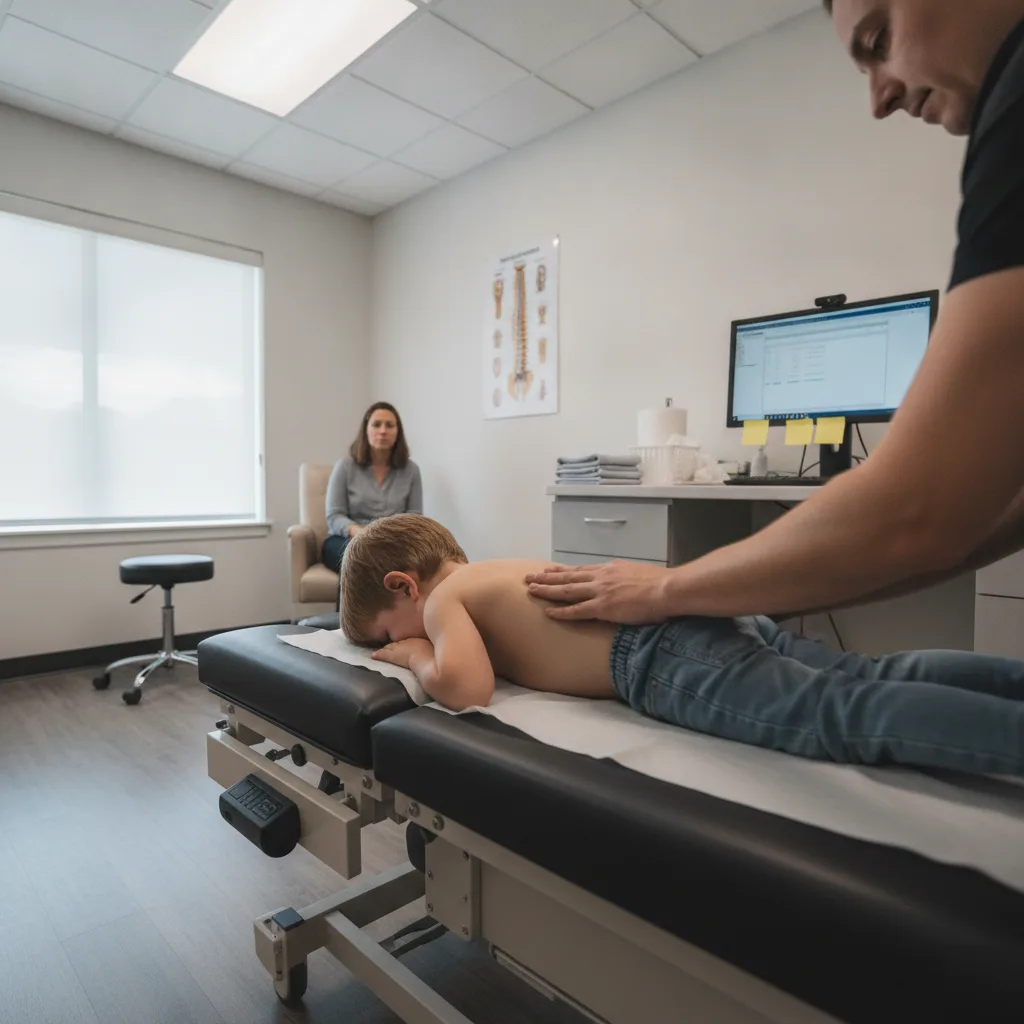
Most parents in Bradley don't think about their child's spine until a problem appears. We understand — that's common. Yet week after week, we see children in our office with issues that began much earlier than anyone recognized.
The birth process places physical stress on a newborn's spine and neck. Even a smooth delivery involves pressure on those tiny vertebrae. As babies grow into toddlers, they fall — often. Learning to walk means tumbling forward, backward, and sideways. These frequent tumbles add up, and the spine absorbs the impact each time.
Pediatric chiropractic care focuses on children's unique needs, not on treating them as small adults. We understand how a developing spine works and what it requires at each stage. A child's spine is still forming, flexible, and building patterns that will carry into adulthood. This is a good time to address small misalignments. The body responds faster, and corrections hold better during these formative years.
Here are some of the things parents notice that bring them to us:
- One shoulder sitting higher than the other
- A head that tilts consistently to one side
- Trouble sleeping or staying comfortable at night
- Frequent ear infections or digestive issues
- Complaints of back or neck pain after sports
These signs don't always point to a serious condition, but we believe they are always worth a professional evaluation.
Many Bradley families ask if chiropractic care is safe for children. The American Chiropractic Association's guidance on pediatric chiropractic safety states that pediatric chiropractic adjustments use very light pressure [1]. This is unlike the pressure an adult receives. Our team is trained in pediatric techniques, and we tailor our approach to each child’s age and size.
A six-week-old needs care completely different from a ten-year-old. We recognize this difference and adapt our methods accordingly.
Consider this perspective: most parents address small problems before they grow into larger ones. We apply this same proactive approach to spinal health. Early attention gives your child a better foundation for their overall wellness.
Conditions Pediatric Chiropractic Care Addresses
Parents in Bradley bring us various concerns. Some have a baby who continues fussing after feeding. Others see a toddler who frequently falls to one side, or a school-age child complaining of headaches every week. We encounter these situations regularly — and in most cases, a structural reason explains what is happening.
Pediatric chiropractic care extends well beyond back pain. The spine influences how the entire nervous system functions, and children's spines experience significant forces from the very start. Even a smooth delivery places stress on a newborn's neck and upper spine — and that's often where issues begin.
Here are some of the most common conditions we help with:
- Colic and excessive crying in infants
- Latching and breastfeeding difficulties
- Torticollis, where a baby's head tilts or rotates to one side
- Ear infections that keep coming back
- Growing pains and postural issues in older kids
- Headaches and neck tension in school-age children
The prevalence of headaches and neck tension often surprises parents. Children carrying heavy backpacks through Bradley area schools, hunching over tablets, and sitting at desks for hours experience cumulative strain. By the time a child can verbalize "my neck hurts," the postural pattern is often already established.
Beyond musculoskeletal issues, the nervous system regulates many bodily functions. We have worked with children experiencing trouble sleeping, chronic constipation, or sensory sensitivities whose parents noticed real improvements after gentle adjustments. We don't claim chiropractic will cure these conditions — but when the spine is aligned and the nervous system experiences less stress, the body generally functions more effectively.
Many parents are unsure if their child's specific concern fits within this category. That's completely fine. We always perform a thorough assessment first. Our team reviews the complete health profile before starting any care, and we're always ready to discuss your child's needs before you schedule an appointment.
Not sure if your child's symptoms are worth checking? A quick assessment tells us a lot — and we explain everything we find before doing anything.
BOOK YOUR APPOINTMENTWhat to Expect at Your Child's First Visit
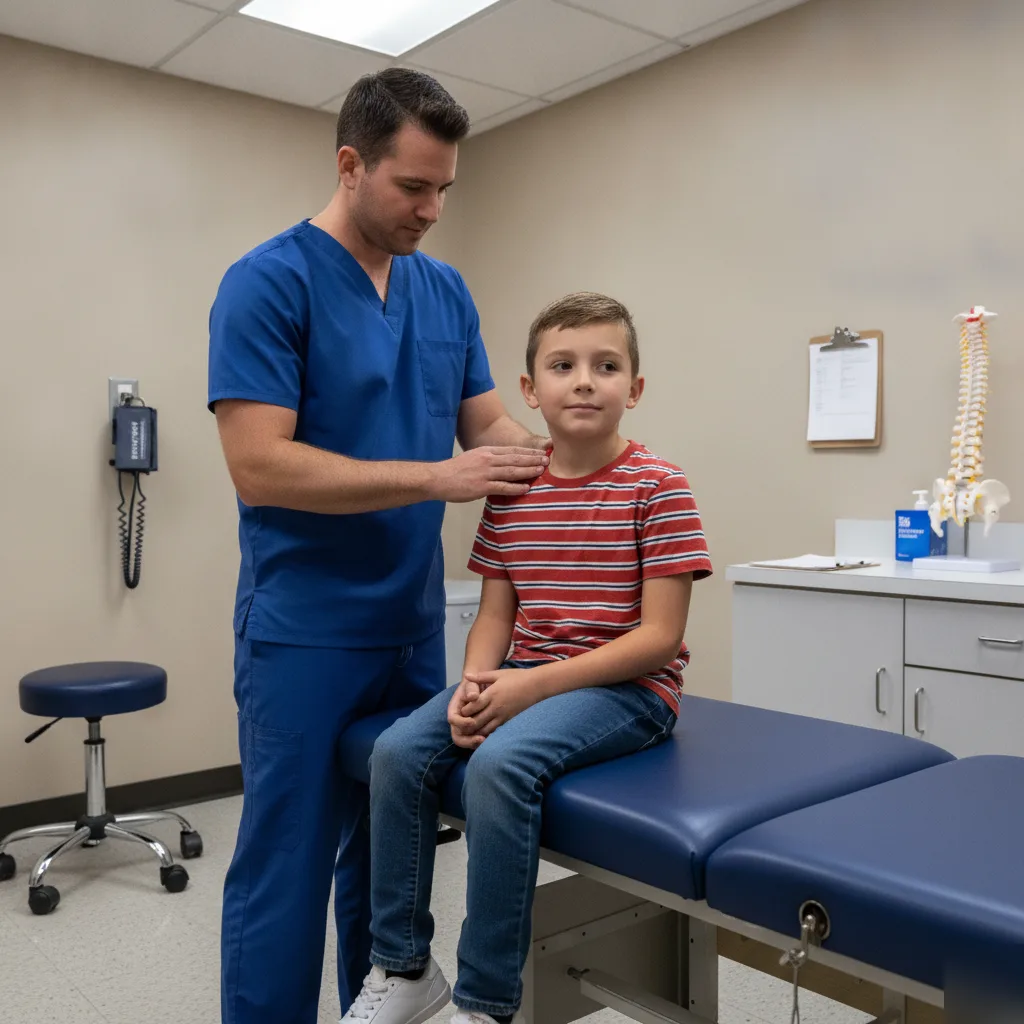
Many parents arrive feeling nervous for their child's first visit. We find this completely normal, and it's one of the most common reactions we see at initial appointments.
The first visit does not involve any forceful adjustments. Instead, we focus on getting to know your child. We begin with a thorough health history — including their birth experience, developmental milestones, and any falls or sports injuries along the way. Children from families in Bradley often experience more physical stressors than parents realize, such as tumbles off bikes, heavy backpacks, or hours spent hunched over tablets. All of these factors matter.
Here's what you can expect during the visit:
- We sit down with you and talk through your child's history and your concerns
- Our team does a postural assessment — watching how your child stands, moves, and holds their head
- We check spinal alignment with a gentle hands-on evaluation — no machines, no pressure
- We explain what we found in plain language before we do anything else
- If your child is ready, we may do a light, gentle adjustment on that first visit — if they're not, we don't push it
Children respond differently than adults. Infants require very little force, often just light fingertip pressure. Toddlers and school-age children are typically curious and relaxed once they understand the process is not frightening. Teens are closer to adults in their response, but we still tailor our approach based on their individual needs.
Our team is licensed and trained specifically in pediatric chiropractic care. We approach this specialization with careful consideration. This is not a general adult adjustment simply scaled down for children.
We include your child in the conversation. This approach builds trust quickly and makes follow-up visits easier for everyone involved.
Families across Bradley share that their child's first visit felt nothing like what they expected. They describe it as calmer, more thorough, and more like a conversation than a traditional clinical exam.
If you have delayed seeking care because you were unsure what to expect, we hope this information helps. Learn more about how our chiropractic team in Bradley can help your entire family.
How Pediatric Adjustments Differ From Adult Chiropractic Care
Many parents in Bradley express nervousness about this specific difference. They have experienced chiropractic adjustments themselves, understand how they feel, and find it difficult to imagine that experience for their child. This concern is completely understandable — but pediatric chiropractic care is very different from what adults experience.
The pressure we use on a child is significantly lighter. We use fingertip pressure, not the firm manual force applied to an adult spine. A newborn adjustment uses about the same gentle pressure you would use to test the ripeness of a peach. There is no twisting, no loud popping sounds, and no dramatic movements involved.
Children's spines are still developing. Their bones are softer, joints are more flexible, and the nervous system continues building its connections. This is exactly why early care can be so helpful — and also why the technique must be completely different from what we would do for an adult with a stiff neck.
Here's how the approach shifts based on age:
- Newborns and infants: fingertip pressure only, often while the baby is held or lying on a soft surface
- Toddlers: light sustained contact, often playfully integrated so the child doesn't know anything clinical is happening
- School-age children: gentle, controlled adjustments with clear explanation beforehand so the child knows what to expect
- Teens: closer to adult technique but still lighter, with full conversation about what we're doing and why
Our team is licensed and trained specifically in pediatric chiropractic technique. This is not a general adult adjustment scaled down — it's a distinct skill set developed for developing bodies, and we treat it that way at every visit.
Have questions about what a pediatric adjustment actually involves? Call us — we walk every parent through exactly what to expect before your child's first visit.
☎ (815) 802-0377Building a Spinal Foundation Through Ongoing Pediatric Care
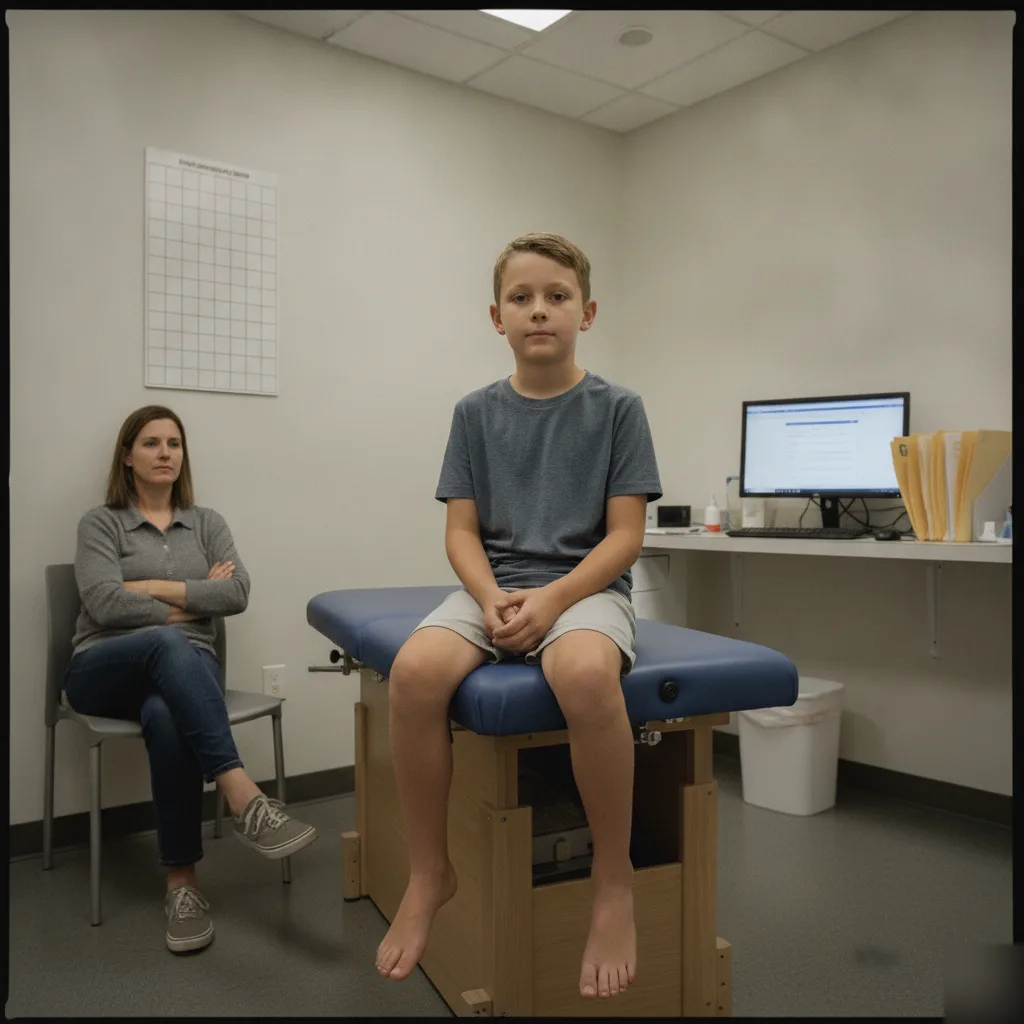
One visit tells us a lot. Consistent care builds something that lasts.
The spinal patterns children develop during their early years — how they hold their head, whether one shoulder sits higher, how they compensate after a fall or injury — carry forward as they grow. Catching these patterns early and addressing them consistently is far easier than unwinding them years later when they've become ingrained.
For most children in Bradley, ongoing care doesn't mean coming in every week indefinitely. It means checking in at the right intervals as your child grows through different physical stages. A baby being seen monthly looks very different from a school-age athlete coming in after a season of heavy backpack use and contact sports.
Here's what we typically see with families who stay consistent:
- Fewer recurring ear infections and less reliance on antibiotics
- Better sleep quality, especially in children who had trouble settling
- Improved posture that parents and teachers start noticing independently
- Faster recovery from sports bumps and minor injuries
- Children who actually ask to come in — because they notice how they feel afterward
That last one is real. Kids are often more in tune with their bodies than we give them credit for. When care is gentle, consistent, and explained clearly, children stop dreading it entirely.
We also work alongside your child's pediatrician, not instead of them. When we see something outside our scope, we say so. When a parent brings us notes from a well-child visit, we read them. The goal is always your child's overall wellbeing — and that's a team effort.
If you've been thinking about bringing your child in but weren't sure where to start, the answer is just to come in. We'll take it from there at whatever pace feels right for your child.
Citations
[1] American Chiropractic Association. "ACA Statement on Pediatric Chiropractic Care." https://www.acatoday.org/news-publications/aca-statement-on-pediatric-chiropractic-care/
Frequently Asked Questions
Common questions about pediatric chiropractic care from Bradley families.
Is chiropractic care actually safe for babies and young children?
Yes, pediatric chiropractic care is safe when performed by a trained provider. The pressure used on infants is about the same as gently pressing your fingertip — nothing like an adult adjustment. A newborn's spine is soft and still forming, so the technique is completely different. We adjust our approach based on your child's age and size. Families in Bradley ask us this question at nearly every first visit, and we always walk through exactly what we'll do before we touch anything.
What signs should make me bring my child in for an evaluation?
Bring your child in if you notice one shoulder sitting higher than the other, a head that tilts to one side, or frequent ear infections. Trouble sleeping, complaints of neck pain after school, or a baby who fusses constantly after feeds are also worth checking. Kids in Bradley schools carry heavy backpacks and spend hours hunched over tablets — those habits set patterns early. You don't need to be certain something is wrong. A quick assessment tells us a lot, and we explain what we find before doing anything.
How does the first visit work, and do I need to prepare anything?
Your child's first visit starts with a conversation, not an adjustment. We go through your child's health history, birth experience, and any falls or sports bumps. Then we do a gentle postural and spinal assessment — no machines, no pressure. We explain everything we find in plain language before we move forward. If your child isn't comfortable on that first visit, we don't push it. Bring any records from your pediatrician if you have them, but you don't need anything special to walk in.
How many visits does a child usually need before parents notice a difference?
Most parents in Bradley notice changes within the first three to five visits, though it depends on the issue and your child's age. Infants with colic or latching difficulties often respond faster than older kids with postural patterns built up over years. A child who has been carrying a heavy backpack and hunching over a screen for two years will take longer to respond than a baby seen at six weeks. We reassess regularly and tell you honestly what we're seeing as we go.
Can pediatric chiropractic care help with things like ear infections or sleep problems?
It can support the body's ability to function better, which sometimes helps with those issues. We don't claim chiropractic cures ear infections or sleep problems. What we do know is that when the spine is aligned and the nervous system isn't under stress, the body works more efficiently. Parents in Bradley have noticed real improvements in sleep and fewer recurring ear infections after gentle adjustments. We always look at the full picture first and work alongside your child's pediatrician — not instead of them.
At what age can a child start receiving chiropractic care?
There is no minimum age. We see newborns, sometimes within days of birth, when a difficult delivery or torticollis warrants early evaluation. The technique used for a newborn is entirely different from what we'd do for a toddler or a ten-year-old — fingertip pressure only, often while the baby is held. Many Bradley families bring their children in at different stages simply to establish a baseline and stay ahead of any developing patterns. The earlier we can assess, the more we can do with less intervention.
Your Child's Spine Is Building Its Foundation Right Now
The patterns that form during childhood carry forward into adulthood. Gentle, early care costs far less effort than correcting long-standing problems years later. Serenity Health & Body is right here in Bradley — give us a call or book online and we'll take it from there.
Office: 535 E. North St., Suite A, Bradley, IL 60915
Call 815-614-3073
Email: [email protected]
Site: www.tryserenity.com