Shockwave Therapy in Bradley, IL | Serenity Health & Body
When chronic pain won't respond to rest or conventional care, shockwave therapy restarts the healing process at the tissue level — no surgery, no downtime.
Conditions That Respond Well to Shockwave Therapy
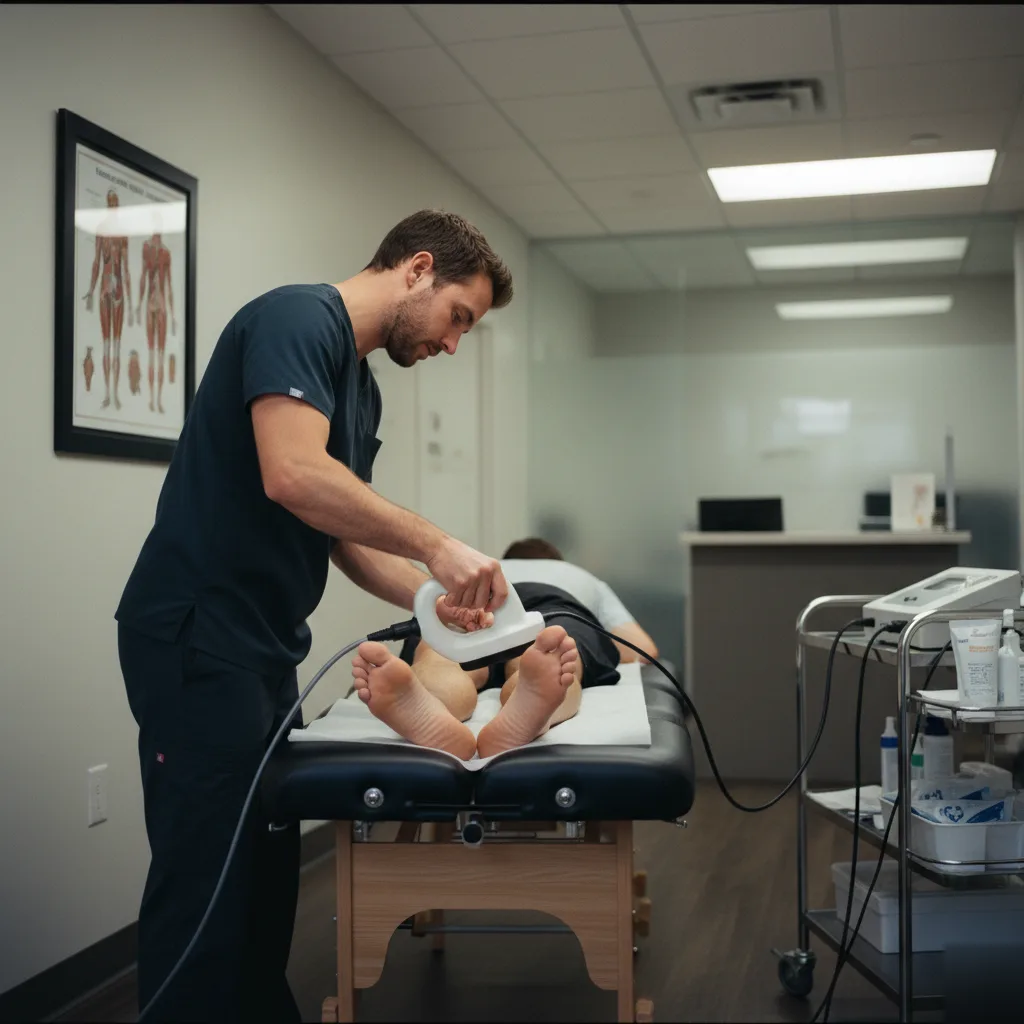
We see a lot of people in Bradley who've been dealing with the same pain for months. They've tried rest and anti-inflammatories, and nothing has really stuck. That's usually the point when shockwave therapy starts making a lot of sense.
The conditions that respond are ones where the tissue has stopped healing on its own. Chronic tendon problems are a good example. The body treated the injury once, laid down some scar tissue, and then just moved on. But the pain didn't. Shockwave therapy restarts that healing response by delivering focused acoustic energy deep into the tissue.
Here are the conditions we treat most often:
- Plantar fasciitis and heel pain that won't quit after months of stretching
- Achilles tendinopathy, especially in active patients who can't afford to stop moving
- Patellar tendinitis, sometimes called "jumper's knee"
- Shoulder calcific tendinitis, where calcium deposits build up and cause real discomfort
- Tennis elbow and golfer's elbow that keep coming back
- Hip flexor and gluteal tendon pain that makes sitting or walking difficult
Patients who come to us from neighborhoods like Sunrise Estates often tell us they've been managing with ice packs and pain relievers for so long it just became their normal. It doesn't have to be.
According to research published in the journal Life, shockwave therapy has shown strong clinical outcomes for chronic musculoskeletal conditions, particularly when conventional treatments haven't produced lasting relief [1]. We've seen this play out in our own practice.
Not every condition is a match, though. Acute injuries, areas near open growth plates in younger patients, or tissue with active infection aren't good candidates. That's why we always do a thorough assessment first — to make sure shockwave therapy is actually the right tool for what you're dealing with, not just the newest one.
If you've been told your pain is "just something you may have to live with," that's worth a second opinion.
How Shockwave Therapy Works on Damaged Tissue
Most people who come to us in Bradley have already tried the usual approach — rest, ice, anti-inflammatories, maybe some stretching. And the pain just keeps coming back. That's usually when shockwave therapy enters the conversation.
Here's what's actually happening inside your body when we use it. Chronic pain in tendons and soft tissue often sticks around because the tissue gets stuck in a kind of failed healing loop. The area isn't getting enough blood flow, and the cells aren't getting the signal to repair themselves. Shockwave therapy sends acoustic pressure waves directly into that tissue. Those waves create a controlled micro-trauma response, which sounds alarming but isn't — it's the same basic principle your body uses every time it heals a cut.
The waves do a few specific things:
- Break up calcified deposits that build up in tendons over time
- Stimulate new blood vessel formation in the treated area
- Trigger the release of growth factors that restart the repair process
- Reduce substance P, a chemical your nervous system uses to signal pain
Patients in Bradley often tell us the area feels less sensitive within the first couple of sessions, even before the tissue has fully healed. That's the pain signaling quieting down while the deeper repair work gets started.
We treat plantar fasciitis, Achilles tendon issues, and shoulder calcifications that haven't responded to anything else. The tissue isn't broken beyond repair — it just needs the right stimulus to finish what it started.
According to research published in the journal Materia Socio-Medica, shockwave therapy has shown meaningful success rates in treating chronic tendinopathies, particularly in cases where conservative care alone didn't hold [2].
The treatment itself takes about 10 to 15 minutes per area. There's some pressure during the session and mild soreness for a day or two after. That's normal — that's the healing response doing its job.
Our team uses shockwave therapy as part of a broader plan, not a standalone. The results hold better that way. Learn more about how our chiropractic team can support your recovery.
Been managing the same pain for months with nothing sticking? Call us — shockwave therapy may be exactly what your tissue needs.
BOOK YOUR APPOINTMENTWhat to Expect During Your Shockwave Session
A lot of people walk in nervous because they don't know what's coming. That's completely normal, and we're happy to walk you through it before we even start.
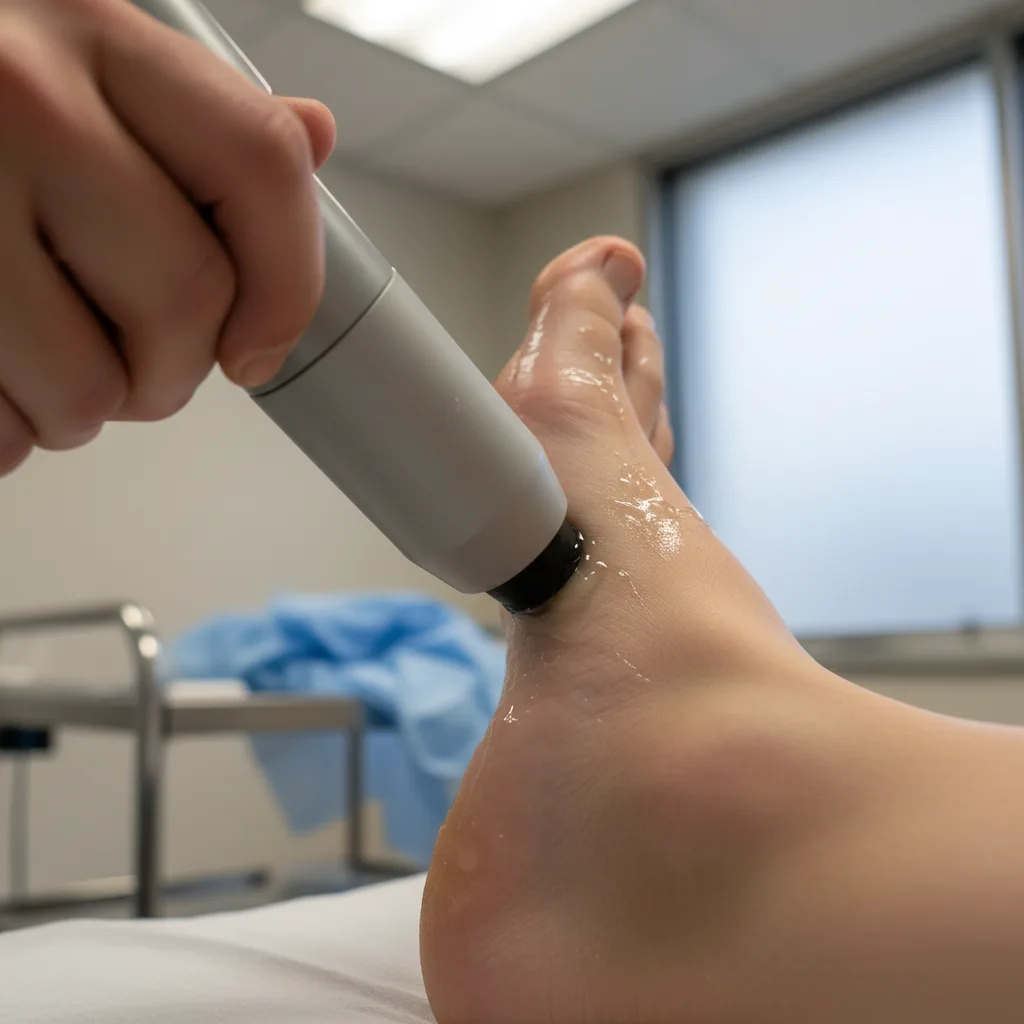
When you come in for shockwave therapy in Bradley, the first thing we do is talk. We want to know exactly where you're hurting, how long it's been going on, and what you've already tried. That conversation shapes everything that follows. Then we'll locate the target tissue — usually by feel and sometimes with your feedback as we press into the area.
Here's what the actual treatment looks like, step by step:
- We apply a small amount of gel to the skin over the treatment area. This helps the sound waves transfer cleanly.
- We place the handheld applicator against your skin and begin with a lower intensity to let your tissue adjust.
- We move the applicator in slow, deliberate passes over the target zone. Most sessions cover the area multiple times.
- We check in with you throughout. You guide us on pressure and sensation.
- We finish up, remove the gel, and talk through what you might feel in the next 24 to 48 hours.
The sensation is hard to describe until you've felt it. Most people say it's a deep tapping or pulsing. Some spots are more sensitive than others, especially if the tissue is really irritated. But it's not the kind of pain that makes you want to stop.
Patients come in bracing for something intense and leave saying it was much more manageable than they expected.
Each session runs about 15 to 20 minutes for the treatment itself. Plan for a little extra time on your first visit for the intake conversation. After your session, some mild soreness is normal for a day or two — that's a sign the tissue is responding. We'll give you simple guidance on what to do and what to avoid so you get the most out of every visit.
Session Count and Timeline: What Most Patients Experience
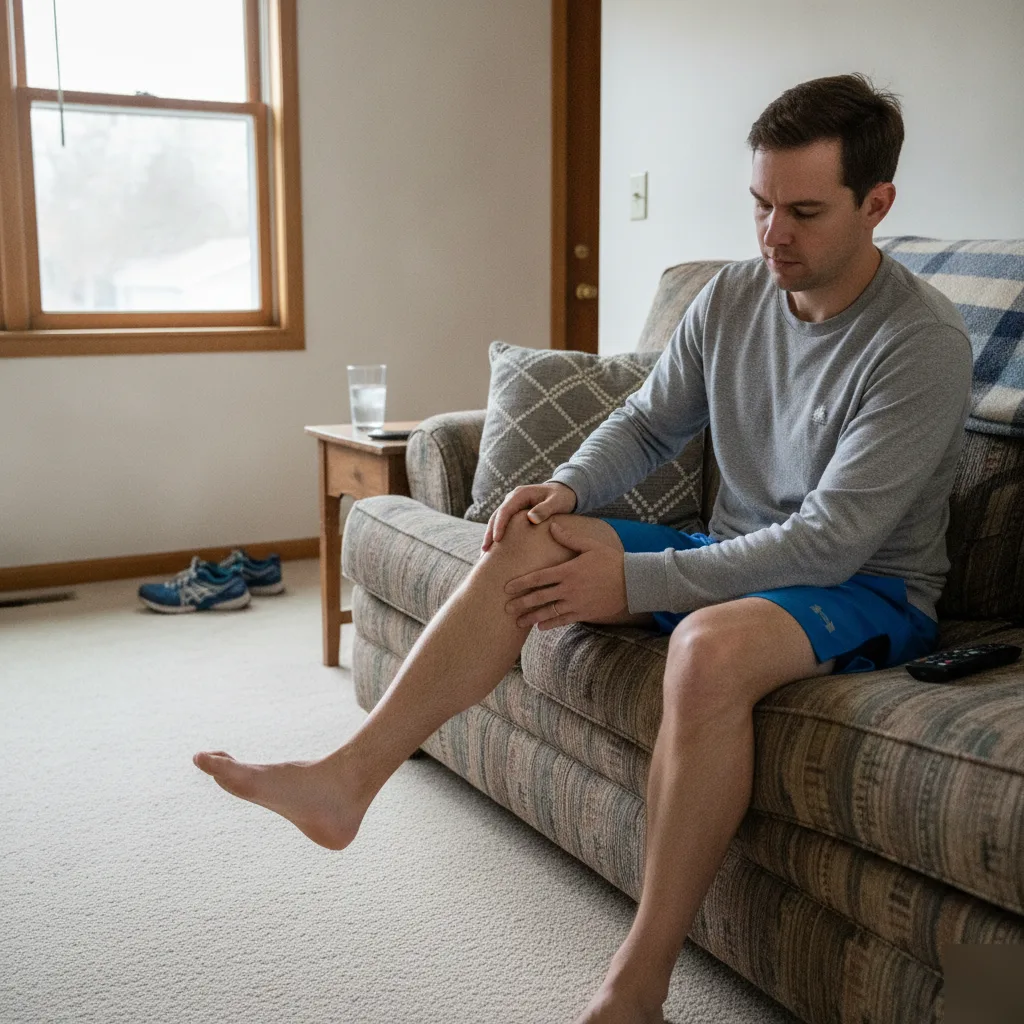
Most people come in wondering how long this is going to take. That's a fair question, and we'd rather give you a straight answer than a vague "it depends."
For most conditions we treat here in Bradley, shockwave therapy follows a pretty predictable pattern. The majority of patients go through three to six sessions total, each spaced about five to seven days apart — giving your tissue time to respond and start rebuilding between visits.
Here's what that actually looks like in practice:
- Sessions one and two tend to feel the most intense. Your body is getting used to the stimulus, and inflammation is being disrupted on purpose.
- By session three, most patients notice a real shift — less stiffness in the morning, moving more freely without bracing for pain.
- Sessions four through six are where the deeper tissue remodeling kicks in. You're not just managing symptoms anymore — you're rebuilding.
It's common for someone to walk in after session three saying they slept through the night for the first time in months. That kind of feedback shows up regularly.
Healing doesn't stop when your sessions do. The tissue continues to remodel for eight to twelve weeks after your last visit. So the improvements you feel at week four are often even better by week ten. According to research from the International Society for Medical Shockwave Treatment, clinical outcomes frequently continue to improve well after the active treatment phase ends.
Chronic conditions — like plantar fasciitis or calcific tendinopathy — sometimes need a full six sessions. Newer injuries or less severe cases can respond in three. We reassess as we go and tell you what we're seeing.
If you've been dealing with the same nagging pain for months, the timeline here is shorter than most people expect. Three to six weeks of consistent sessions, then your body does the rest of the work. That's real progress on a real schedule.
Ready to stop guessing and start a plan that actually addresses the tissue? Our Bradley team is here to walk you through what shockwave therapy looks like for your specific condition.
☎ (815) 802-0377Shockwave Therapy as Part of Your Chiropractic Care Plan
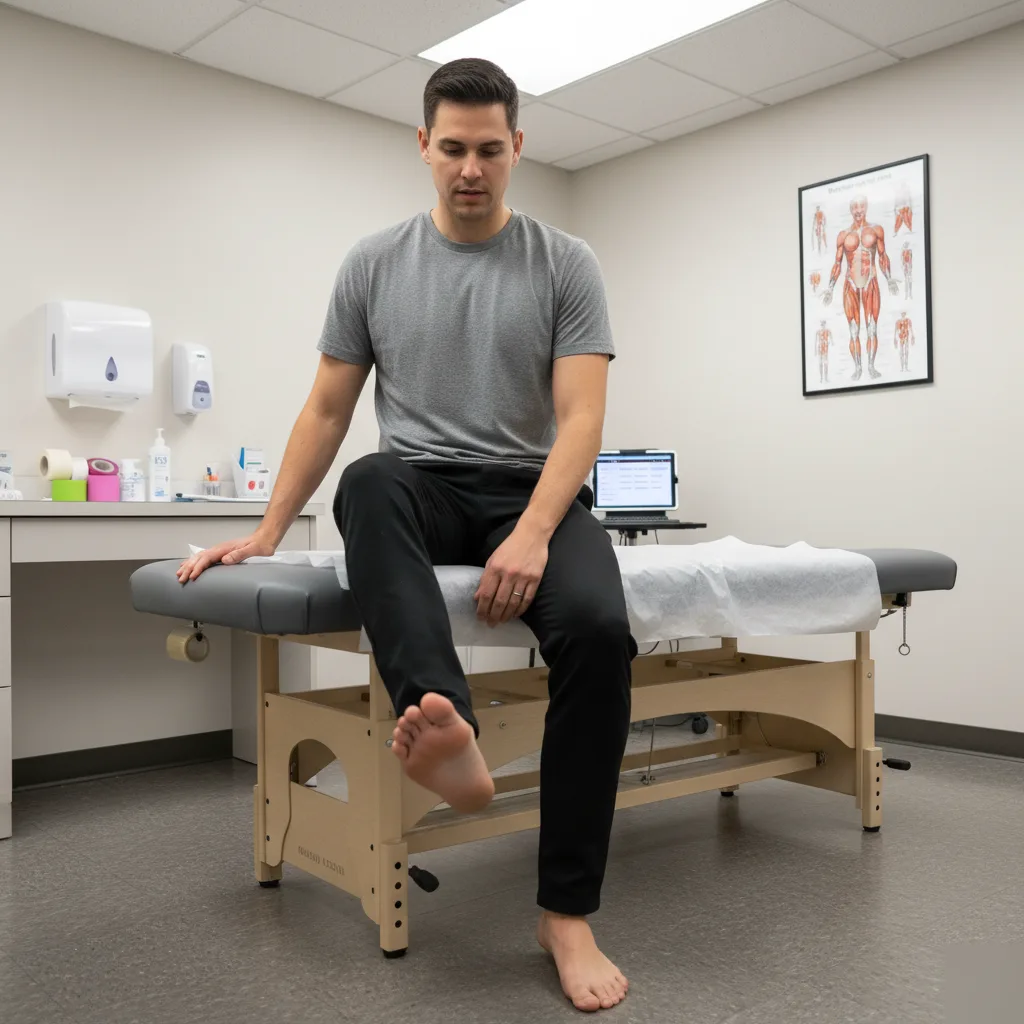
Shockwave therapy doesn't work in isolation. The results we see in Bradley come from combining it with chiropractic adjustments — not treating it like a standalone.
Here's why that matters. When a joint is misaligned, the surrounding soft tissue takes on extra stress. Tendons, fascia, and muscle fibers tighten up to compensate. Shockwave therapy does a great job breaking down scar tissue and waking up the body's healing response, but if the underlying alignment problem isn't addressed, the tissue stress just comes back. That's something we see all the time in our office.
So we build a plan that layers these tools together. A typical combined approach looks like this:
- Start with a full assessment to identify both the structural and soft tissue issues driving your pain.
- Use chiropractic adjustments to restore joint alignment and reduce nerve pressure.
- Apply shockwave therapy to the affected soft tissue to stimulate circulation and break up calcification or adhesions.
- Support recovery with targeted exercises or other therapies — like deep tissue massage or myofascial release — as needed.
- Reassess and adjust the plan as your body responds.
Patients dealing with chronic heel pain, shoulder tendinopathy, or stubborn back issues often reach us after months of trying one thing at a time. And that's usually the problem — one tool rarely does the whole job.
For folks in the Riverview area of Bradley who work physically demanding jobs and can't afford to stay sidelined, this combined approach has made a real difference. Our team is licensed and trained to assess which combination makes sense for your specific situation. We're not going to suggest shockwave therapy if it's not the right fit — but we also won't leave it off the table if it could genuinely speed up your recovery.
The goal is simple: get you moving better, faster, with less pain. That's the whole point of building a care plan instead of just booking sessions.
Citations
[1] Life (journal). "Shockwave Therapy for Chronic Musculoskeletal Conditions." https://pmc.ncbi.nlm.nih.gov/articles/PMC12734210/
[2] Materia Socio-Medica (journal). "Shockwave Therapy in Chronic Tendinopathies." https://pmc.ncbi.nlm.nih.gov/articles/PMC6029898/
Frequently Asked Questions
Common questions about shockwave therapy from our patients in Bradley and the Kankakee area.
How many shockwave therapy sessions will I need before I notice a difference?
Most people in Bradley start noticing changes within three to five sessions. Some feel less sensitivity in the treated area even earlier than that. The exact number depends on how long the condition has been going on and how your tissue responds. Chronic problems that have been building for a year or more usually need the full course. We reassess as we go so we're not guessing.
Is shockwave therapy painful, and what does it actually feel like?
It's not pain-free, but most patients describe it as a deep tapping or pulsing pressure — not something that makes you want to stop. Sensitive spots, like an irritated Achilles or plantar fascia, will feel more intense than others. We start at a lower intensity and adjust based on your feedback throughout the session. Most people leave saying it was much more manageable than they expected going in.
Can I keep exercising and staying active while going through shockwave treatments in Bradley?
Yes, in most cases you can stay active between sessions. We do recommend dialing back high-impact activity for a day or two right after treatment while the healing response settles. Patients from active neighborhoods like Sunrise Estates who can't afford to stop moving entirely — runners, people on their feet all day — do well with this approach. We'll give you specific guidance based on what we're treating.
What happens if I've already tried physical therapy and it didn't work?
Shockwave therapy is often the right next step after physical therapy hasn't held. The reason is that chronic tendon problems sometimes get stuck in a failed healing loop where the tissue just stops responding to conventional care. Shockwave delivers acoustic energy that restarts that repair process at the cellular level. We see this regularly with conditions like plantar fasciitis and Achilles tendinopathy that have already gone through rounds of stretching and rehab without lasting relief.
Who is not a good candidate for shockwave therapy?
Shockwave therapy isn't right for everyone. Acute injuries, areas near open growth plates in younger patients, and tissue with active infection are not good candidates. That's why we always do a thorough assessment before starting — we want to make sure this is actually the right fit for your specific situation. If it's not the right tool for what you're dealing with, we'll tell you that directly.
How long does a shockwave session take at your Bradley clinic?
The treatment itself runs about 15 to 20 minutes per area. Your first visit will take a little longer because we spend time talking through your history, locating the target tissue, and making sure you know what to expect. After the session, we walk you through what you might feel in the next 24 to 48 hours so nothing catches you off guard.
That Chronic Pain Has an Expiration Date — If You Treat It
Months of managing the same tendon pain, heel pain, or shoulder irritation doesn't have to be your story. Shockwave therapy gives your tissue the signal it stopped receiving. Serenity Health & Body is right here in Bradley — call us or book online today.
Office: 535 E. North St., Suite A, Bradley, IL 60915
Call 815-614-3073
Email: [email protected]
Site: www.tryserenity.com