
Therapeutic Ultrasound in Bradley, IL
Sound waves that reach the tissue your hands can't — reducing inflammation, breaking up scar tissue, and restarting healing that stalled out.
What's on This Page
What Therapeutic Ultrasound Actually Does to Damaged Tissue

Most people come in thinking it's like a heating pad. It's not.
Therapeutic ultrasound uses sound waves — not heat, not electricity — to reach tissue that hands simply can't get to. The device sends those waves deep into muscle, tendon, and ligament. What happens next is actually remarkable. The tissue absorbs that energy and starts to respond. Blood flow increases, cell activity picks up, and the healing process that may have been stuck finally starts moving again.
We see this every week with patients in Bradley who've been dealing with the same nagging injury for months. The area feels stiff in the morning, maybe a little swollen, never quite right. That's often a sign the tissue healed wrong the first time, or didn't fully heal at all.
There are two ways therapeutic ultrasound works, and both matter:
- Thermal effect: The sound waves create gentle warmth deep in the tissue. This loosens tight fascia and helps muscles relax before we work on them.
- Non-thermal effect: The waves create tiny vibrations at the cellular level. That movement helps reduce swelling and speeds up how fast cells repair themselves.
Research by the Internal Medicine Review notes that therapeutic ultrasound has been used clinically for decades to treat soft tissue injuries, and the research on its effects on tissue repair is well established.
So why does this matter for you? If you've got a tendon that won't settle down, a shoulder that keeps flaring up, or scar tissue that's limiting your movement, the problem is often below the surface. Massage helps. Adjustments help. But sometimes you need something that goes deeper than either of those.
Our team works with patients across Bradley who've tried everything else. Therapeutic ultrasound isn't a last resort — it's just the right tool for a specific kind of problem. Knowing when to use it is exactly what we're trained for.
Conditions That Respond Well to Ultrasound Therapy
Not every ache and injury responds the same way to treatment. But therapeutic ultrasound has a wide reach, and we see it work consistently well for a specific group of conditions.
We work with patients across Bradley every week who come in frustrated — they've tried to rest, tried ice, and nothing's moving the needle. A lot of the time, therapeutic ultrasound is exactly what's been missing from their care plan.
Here's what tends to respond really well:
- Tendinitis in the shoulder, elbow, or knee
- Muscle strains and deep tissue injuries that won't fully heal
- Bursitis and joint inflammation
- Scar tissue and adhesions from old injuries or surgeries
- Plantar fasciitis and heel pain
- Chronic low back and neck pain with soft tissue involvement
Scar tissue is one we see a lot. Someone had a procedure or a bad sprain years ago, and the tissue healed wrong — it tightened up, now it pulls, aches, or limits movement. The sound waves penetrate deep enough to soften that tissue from the inside, something topical creams and stretching alone just can't reach.
Patients often mention the same thing: they've been dealing with the same nagging injury for months. A shoulder that never fully came back after a fall. A knee that flares up every time they try to stay active. These aren't dramatic injuries, but they're the kind that grind you down over time.
And it's not just pain — some patients notice stiffness more than pain, that locked-up feeling that limits how far they can reach or bend. Ultrasound therapy helps loosen that up by warming the tissue at a cellular level, which makes movement easier and rehab more effective when we pair it with other care.
If you're not sure whether your condition fits, that's okay. We'd rather have a conversation and tell you it's not the right fit than have you keep guessing on your own.
Been dealing with the same soft tissue pain for months with nothing sticking? Therapeutic ultrasound may be exactly what your tissue needs — call us and we'll walk through it.
BOOK YOUR APPOINTMENTStep-by-Step: What Happens During a Session at Our Bradley Clinic
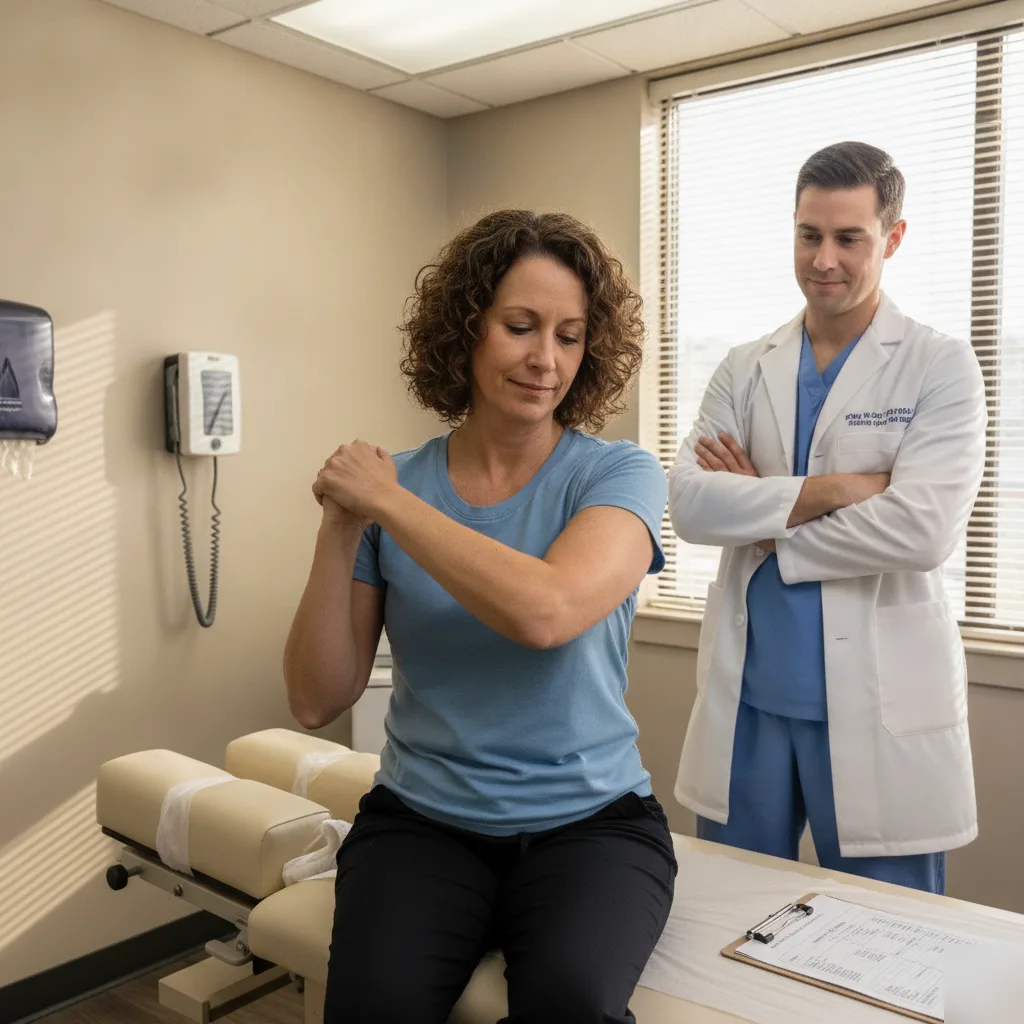
A lot of people walk in not knowing what to expect. That's completely fine. Here's exactly what happens from the moment you sit down.
We start with a quick check-in on how you're feeling that day — your pain level, where it's concentrated, whether anything's changed since your last visit. This isn't small talk. It tells us how to adjust the session before we even get started. Then we get you positioned comfortably on the table.
We apply a small amount of gel to the skin over the target area — same idea as the ultrasound gel you'd see in a medical office. It helps the sound waves move cleanly through the tissue without interference from air. We warm it first when we can, especially for patients coming in on a cold Bradley morning.
From there, the process looks like this:
- We place the ultrasound transducer gently against your skin and begin slow, circular movements over the treatment area.
- The device delivers sound waves deep into the tissue. You won't hear anything. Most people feel mild warmth or a faint buzzing sensation.
- We monitor your feedback the entire time. If anything feels uncomfortable, we adjust the intensity immediately.
- The active treatment phase runs roughly six to ten minutes depending on the area being treated.
- We wipe off the gel, check in with you again, and note any observations in your file.
No recovery time. No soreness afterward. Most patients head straight back to work or errands.
Someone expects it to be intense or uncomfortable, and they're genuinely surprised by how calm the whole thing is. The sound waves are doing the work you can't feel
WebMD explains more how ultrasound therapy works by increasing local blood flow and tissue extensibility, which is why it's used before stretching or manual work [2]. We often pair it with other treatments from our care plan for that reason.
The whole visit, including check-in, usually runs under 30 minutes. Bradley patients tell us that's one of the things they appreciate most. Find out more about how our chiropractors support our patients every day in Bradley, Illinois.
How Ultrasound Therapy Pairs With Chiropractic Adjustment
Here's something we see constantly in Bradley. A patient comes in, they've had the same stiff, locked-up area for weeks, and the adjustment just doesn't hold the way it should. The joint moves, but it snaps right back. That's usually soft tissue talking.
Therapeutic ultrasound changes that conversation.
When we use therapeutic ultrasound before a chiropractic adjustment, it warms the tissue at a deep level — not surface heat, but real cellular warmth that loosens the muscle fibers, reduces tension around the joint, and makes the adjustment easier to perform and easier for your body to accept. Think of it like warming up a rubber band before you stretch it. The tissue responds better, the adjustment goes smoother, and you're not fighting your own body the whole time.
We also use it after an adjustment in some cases. If there's inflammation around a joint we've just worked on, therapeutic ultrasound helps calm that response down. It moves fluid, supports circulation, and gives the surrounding tissue a reason to settle into the corrected position instead of pulling everything back out of place.
The conditions where this pairing works especially well include:
- Chronic low back pain with muscle guarding
- Neck stiffness that limits how far the adjustment can reach
- Herniated disc cases where surrounding tissue is tight and reactive
- Sciatica with muscle spasm along the hip and glute
Patients in Bradley who've tried adjustments alone and felt like they plateaued — this is often why. The joint's ready. The muscle isn't.
And that's the thing about combining these two approaches: they're not competing, they're working the same problem from different angles. The adjustment corrects the structure. Therapeutic ultrasound prepares and supports the soft tissue around it. Together, they tend to get results that neither one gets on its own.
Not sure if this combination is right for what you're dealing with? That's the most common question we get. A quick conversation tells us a lot.
Adjustments not holding the way they should? Therapeutic ultrasound may be the missing piece — our Bradley team can walk you through it.
☎ (815) 802-0377How Many Sessions You Can Realistically Expect
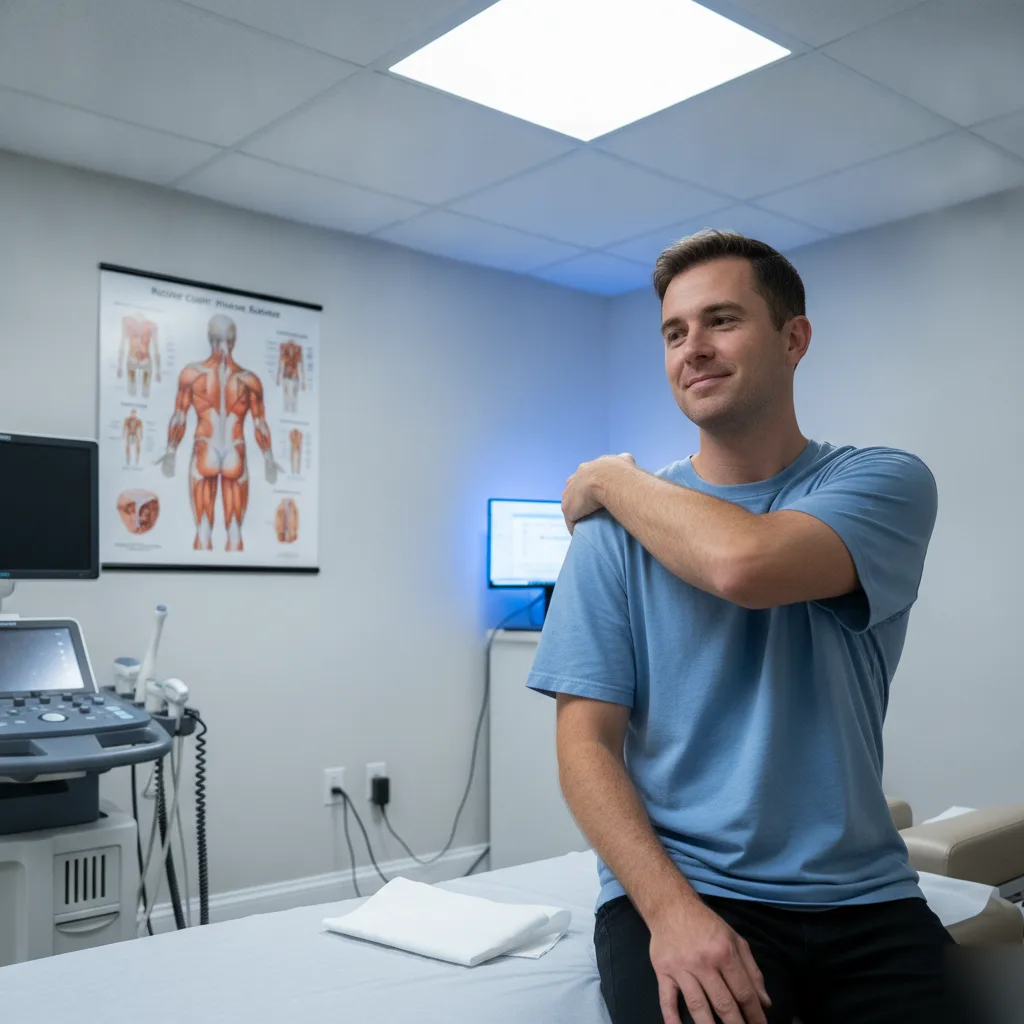
This is the question we get most often from new patients in Bradley. And it makes sense — you want to know what you're committing to before you start.
The short answer is that most people need between 6 and 12 sessions. But that range exists for a reason, and where you land in it depends on a few specific things.
What we're treating matters a lot. A fresh muscle strain from a weekend game is a very different situation from a chronic shoulder issue that's been building for three years. Acute injuries respond faster, sometimes in as few as 4 to 6 sessions. Chronic conditions take longer — the tissue changes are deeper and more stubborn.
Here's what typically shapes the timeline:
- How long you've had the injury or pain
- Whether there's scar tissue or calcification involved
- How your body responds after the first 2 to 3 sessions
- Whether you're combining therapeutic ultrasound with other care like chiropractic adjustment or soft tissue work
We usually schedule sessions two to three times per week at first. That frequency keeps the tissue responding. Once we see progress, we space things out. Most patients in Bradley hit a turning point around session four or five — that's when they start noticing real change between visits, not just during them.
Don't judge the treatment after one session. Therapeutic ultrasound works by building a cumulative effect in the tissue. One session won't tell you much. Three sessions will tell you a lot more.
We reassess regularly. If you're not seeing progress by session six, we're not going to keep doing the same thing and hope for a different result. We adjust the protocol, look at what else might be going on, and talk through next steps. Most people finish a full course of care and don't need to come back for the same issue. Some do return for maintenance or a flare-up — that's normal, not a failure. The goal is always to get you better and keep you that way.
Citations
[1] Internal Medicine Review. "Therapeutic Ultrasound and Soft Tissue Repair." https://pmc.ncbi.nlm.nih.gov/articles/PMC6128661/
[2] WebMD. "What to Know About Ultrasound Physical Therapy." https://www.webmd.com/pain-management/what-to-know-about-ultrasound-physical-therapy
Frequently Asked Questions
Common questions about therapeutic ultrasound from our patients in Bradley and the Kankakee area.
How many sessions will I need before I notice a difference?
Most patients in Bradley start noticing changes within three to six sessions. That said, it depends on how long you've had the injury and how deep the tissue damage goes. A fresh muscle strain may respond faster than scar tissue from a surgery two years ago. We track your progress each visit and adjust the plan as we go. You won't be locked into a set number of sessions before we reassess what's actually working for you.
Is therapeutic ultrasound safe if I've had a previous injury in the same area?
Yes — and honestly, old injuries are some of the cases where it helps most. If tissue healed wrong the first time — tightened up, formed adhesions, or never fully recovered — therapeutic ultrasound can reach that area and start softening it from the inside. We do a quick check-in before every session to understand your history. There are a few specific contraindications, like active infections or certain implants, and we screen for those before we ever apply the device.
What should I do before coming in for my first appointment at the Bradley clinic?
Wear or bring clothing that gives easy access to the area we're treating. If it's a shoulder, a loose tank top works well. If it's a knee or lower leg, shorts are helpful. You don't need to fast, avoid caffeine, or do anything special beforehand. Just come in and tell us exactly where it hurts and how long it's been bothering you. The more specific you can be, the better we can target the session from the start.
Can therapeutic ultrasound help with scar tissue from an old surgery?
Yes — scar tissue is actually one of the most common reasons people in Bradley come to us. After a procedure or a bad sprain, tissue sometimes heals in a way that tightens and restricts movement. Stretching and topical treatments can't reach that layer. The sound waves penetrate deep enough to soften the tissue at a cellular level, which gradually improves flexibility and reduces the pulling or aching sensation. It's a slow process, but patients consistently notice real improvement over a course of treatment.
Will I feel anything during the session, and is there any downtime afterward?
Most people feel mild warmth or a faint buzzing sensation — nothing sharp or uncomfortable. If the intensity feels off, we adjust it right away based on your feedback. There's no downtime after a session. The majority of our Bradley patients head straight back to work, errands, or picking up their kids. You won't need to ice the area or rest it afterward. The whole appointment is calm and low-key, which surprises a lot of first-timers who expected something more intense.
How does therapeutic ultrasound differ from the ultrasound used for imaging?
They use the same basic technology — sound waves — but for completely different purposes. Diagnostic ultrasound produces images of internal structures; therapeutic ultrasound delivers energy into soft tissue to promote healing and reduce inflammation. The frequencies and intensities are set differently, and the therapeutic device is moved in slow passes over the skin rather than held still to capture a picture. There's no imaging happening during a therapeutic session. We're not looking at anything — we're treating the tissue directly.
That Nagging Injury Has Been There Long Enough
If the same soft tissue pain keeps coming back no matter what you try, something below the surface hasn't been addressed yet. Serenity Health & Body is right here in Bradley — call us or book online and let's get to it.
Office: 535 E. North St., Suite A, Bradley, IL 60915
Call 815-614-3073
Email: [email protected]
Site: www.tryserenity.com